

Every year, lakhs of students sit for competitive exams. Many of them study hard. They wake up early. They solve many books. Still, they do not clear the exam. Why does this happen? The answer is not a lack of hard work. The answer is a set of repeated errors. These errors cost students their seats, their years, and their confidence.
In this article, we will look at the common mistakes students make in competitive exams. We will also see how to fix each mistake. This is not a theory post. This is a practical guide. Read it slowly. Take notes.
Top 10 Errors to Avoid in Competitive Exam Preparation
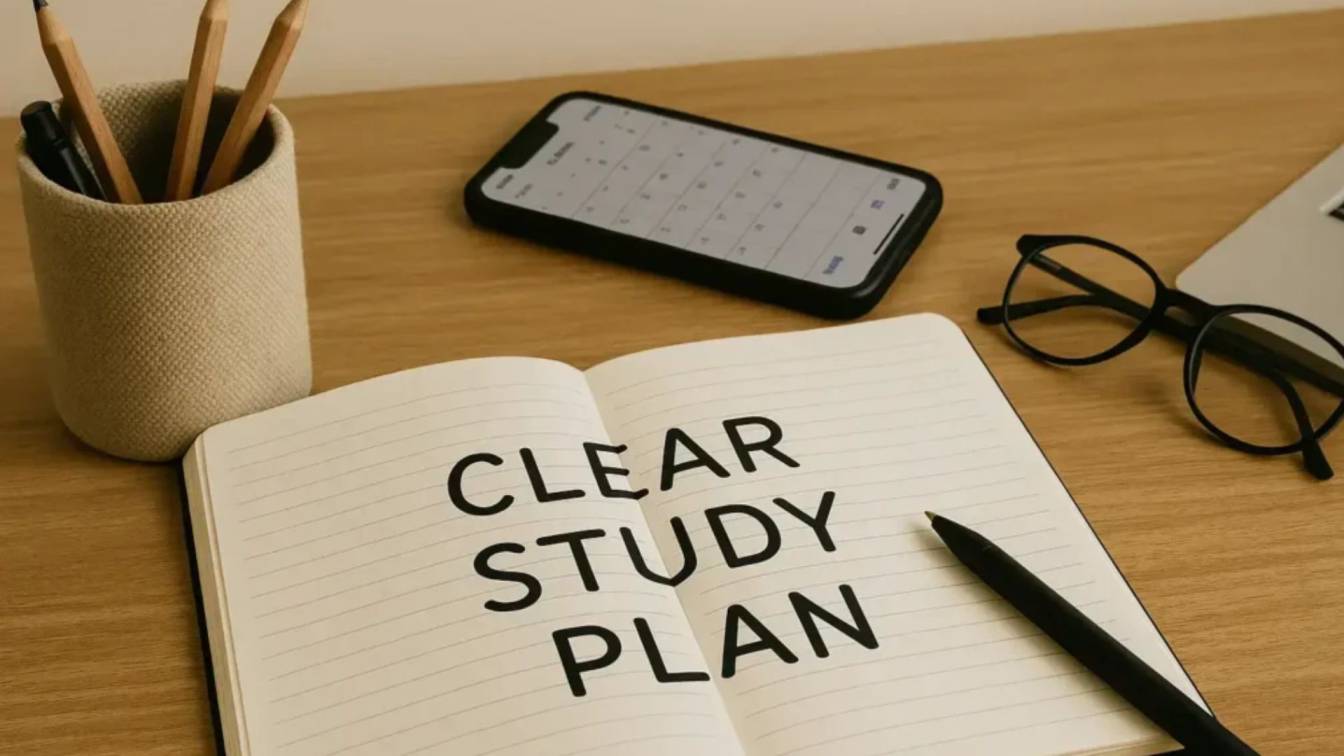
1. Starting Without A Proper Plan
Many students start their preparation without a clear plan. They open a book randomly. They study one chapter today. They study a different subject tomorrow. There is no direction.
When there is no plan, there is no completion. You will keep jumping from topic to topic. At the end of three months, you will realize you have finished nothing fully.
What to do instead: Take one blank page. Write down your exam date. Write down all the topics in the syllabus. Divide these topics into weeks. Assign each day a fixed subject and fixed chapters. Follow this plan like a train follows its track.
Read: What is the Difference Between Public and Private Schools?
2. Ignoring The Exam Syllabus And Pattern
Another big problem is ignoring the official syllabus. Students start reading popular books. They solve tough questions from other exams. They forget to check what the actual exam wants.
Every competitive exam has a fixed syllabus. It also has a fixed pattern. How many questions come from math? How many from reasoning? Is there negative marking? What is the time limit? If you do not know these things, you are shooting in the dark.
What to do instead: Download the latest syllabus from the official website. Print it. Paste it on your study table. Also print the last year exam pattern. Keep these papers with you every day. Do not study anything that is not in the syllabus.
3. Collecting Too Many Study Materials
This is very common today. Students download ten PDFs. They buy five books for one subject. They join three online courses. Then they feel confused. They do not know which book to open first.
Too many sources do not help. They waste your time. You spend your energy deciding what to study instead of actually studying.
What to do instead: Choose one good book for each subject. Choose one teacher or one online course. Stick to it till the end. Only after finishing this base material, you can look at other sources for extra practice.
4. Skipping The Small Topics
Students love big chapters. They give hours to difficult topics. They feel proud after solving hard questions. But they ignore the small topics. Topics that are easy to score. Topics that take less time.
Competitive exams do not only ask hard questions. They ask simple questions too. And these simple questions come from small topics. If you skip them, you lose easy marks.
What to do instead: Make a list of all small topics in each subject. Finish them first. These topics give you confidence and quick marks. After that, go to the big chapters.
5. Not Solving Previous Year Papers
This is one of the biggest common mistakes students make in competitive exams. They read theory. They solve examples. But they never sit with a real previous year paper. They do not know the real difficulty level. They do not know which topics repeat every year.
Previous year papers are your best friend. They show you the exact exam. They tell you what the examiner likes to ask.
What to do instead: Collect the last five to ten years papers. Solve each paper like a real exam. Keep a timer. Sit in a quiet room. After solving, check your mistakes. Note which topics come again and again. Give extra time to those topics.
6. Avoiding Mock Tests
Many students avoid mock tests. Why? Because they fear low scores. They think "I will take a mock test after I finish everything." But that day never comes. Or when it comes, it is too late.
Mock tests are not for showing high scores. They are for finding your weak spots. They teach you time management. They teach you how to stay calm under pressure.
What to do instead: From the first month of your preparation, take one mock test every week. Even if you have studied only three chapters. Take it. You will get very low marks. That is okay. Note your mistakes. Work on them. Then take the next test.
7. Poor Time Management On Exam Day
You have prepared for one year. You know the answers. But on exam day, you spend too much time on one hard question. You forget to check the clock. Suddenly you hear "last five minutes." And you still have twenty questions left.
This is painful. It is not lack of knowledge. It is lack of time management.
What to do instead: Before exam day, decide your time per question. For example, if you have 100 questions in 120 minutes, give only one minute per question. If a question takes more time, leave it and move on. Come back later if time remains.
8. Fear Of Negative Marking
Some students become too careful because of negative marking. They attempt only ten questions out of fifty. They leave everything else. This is as bad as guessing everything.
Yes, negative marking is there. But leaving all questions also does not give you marks. You need to find a balance.
What to do instead: Attempt questions you are 90 percent sure of. For questions where you have no clue, leave them. But for questions where you can remove two wrong options, make a smart guess. Practice this balance in mock tests before the real exam.
You May Also Like: Exam Anxiety Tips Every Student Should Know
9. Changing Answers At The Last Moment
You have marked an answer. You are moving to the next question. Then doubt comes. "Maybe this is wrong." You go back. You erase. You mark a new answer. After the exam, you check the answer key. Your first answer was correct. The second one was wrong.
This happens to almost every student. Your first instinct is usually right. Your brain has already done the work.
What to do instead: Once you mark an answer, do not change it unless you are 100 percent sure it is wrong. That means you have read the question again and you have solid proof. Otherwise, leave it. Trust your first answer.
10. No Revision Time In The Schedule

Students finish the syllabus. Then they think "I am done." But they forget one thing. The human brain forgets. If you study a topic today, after thirty days you will remember only half of it. After sixty days, even less.
If you do not revise, your hard work goes to waste.
What to do instead: Keep the last thirty to forty days only for revision. Do not start any new topic in this time. Solve full length papers. Go through your notes. Read your mistake diary. Revision is what turns your preparation into a result.
11. Ignoring Health And Sleep
This is the most ignored mistake. Students stop sleeping. They drink four cups of tea or coffee. They eat junk food to save time. Their body becomes weak. Their mind becomes foggy. On exam day, they have headache and low energy.
Your brain is an organ. It needs sleep to store memory. It needs good food to work fast. Without health, all your study is useless.
What to do instead: Sleep for seven hours every night. Eat simple home food. Walk for twenty minutes daily. Drink water. On the day before the exam, do not study late. Sleep early. Go to the exam hall with a fresh mind.
12. Comparing With Other Students
You see a friend solving questions faster. You see a post on social media of someone studying twelve hours a day. You feel bad. You feel you are not good enough. You change your plan. You start rushing. This leads to more mistakes.
Everyone has a different speed. Everyone has a different way of learning. Comparison does not help you. It only creates fear.
What to do instead: Stop checking what others are doing. Close social media during your preparation time. Focus only on your own plan. Your only competition is your own yesterday.
Conclusion
Competitive exams are not only about being smart. They are about being disciplined. They are about not repeating the same errors again and again. The common mistakes students make in competitive exams are not secrets. They are well known. Still, students keep making them. Because they do not pause and check their own habits.
Now you know these mistakes. That is the first step. The second step is action. Pick two mistakes from this list that you are making today. Work on them this week. Then pick two more next week. Slowly, you will see your mock test scores going up. Your confidence will go up. And on the final day, you will not make these mistakes.