

I remember sitting in class looking at my textbook. The words were there. I read them. Nothing stayed. I tried again. Same result. My friend next to me read the same page once and understood everything. I felt slow. I felt stupid. Then I found out something important. My friend learned by listening. I learned by seeing. There was nothing wrong with me. I just needed different tools.
This article is for people like me. People who need to see things to learn exam study techniques for visual learners.
What Is A Visual Learner?
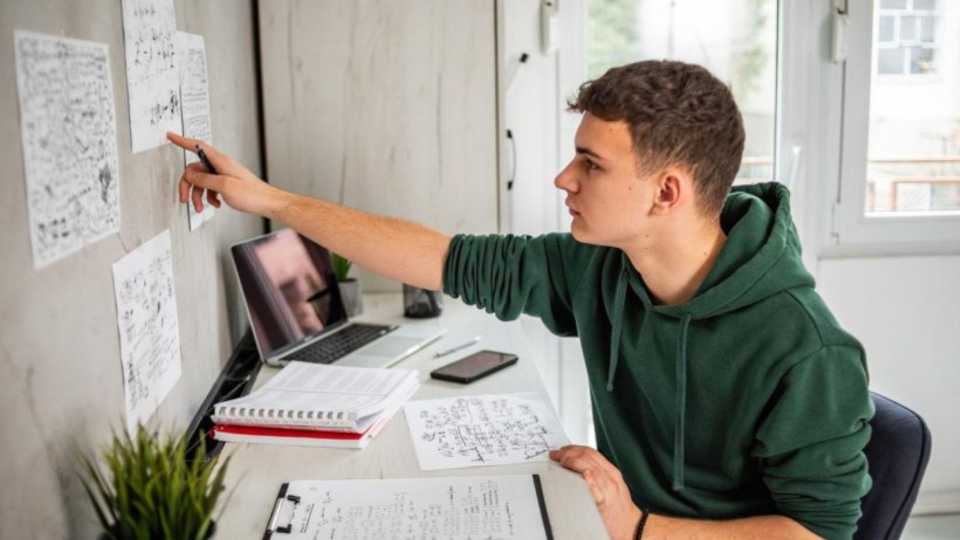
Some people can hear a lecture and remember every word. That is not me. I need to see the information.
If you are a visual learner, you probably do these things:
- You remember faces more than names.
- You like looking at pictures and charts.
- You draw little pictures in your notes.
- You notice colors and designs.
- You get bored just listening to someone talk for a long time.
That is how I am. That is how many people are. It is not a problem. It is just how our brains work.
Read Also: How To Prepare For Multiple Exams In One Week
Why Old Study Methods Fail You?
Here is what most students do. They read their textbook. They write notes. They read the notes again. They try to memorize. For visual learners, this does not work well. Reading words over and over does not help. You need pictures. You need color. You need to see the shape of the information.
I tried the old way for years. I spent hours reading and rereading. I got bad grades. I felt tired. I felt like giving up.
When I changed my methods, everything changed. My grades went up. My stress went down. I actually started enjoying studying.
Change Your Notes Into Pictures
This is the biggest change you can make. Stop writing notes in straight lines. Start drawing your notes.
The Mind Map Method
- Take a piece of paper. Turn it so it is wider than it is tall.
- Write your main topic in the middle of the page. Draw a circle around it.
- Now think about the big parts of that topic. Draw lines from the center to each part. Write the name of each part on the line.
- From each part, draw smaller lines. Write details on these lines.
Use different colors for different parts. One color for causes. Another color for effects. Another color for people involved. This works because your brain sees the whole picture at once. You see how things connect. You see the big idea and the small details together. I did this for my history class. I put World War Two in the center. Then I made branches for causes, countries, battles, and results. I added little drawings. A flag for each country. A tank for battles.
When I looked at my map, I saw everything at once. I did not need to read pages and pages. Just one picture.
Use Color To Organize
- Color is not just pretty. Color helps your brain remember.
- Pick a color for each subject. Blue for math. Green for science. Yellow for history.
- Use highlighters when you read. Pick one color for main ideas. Pick another color for examples. Pick a third color for definitions.
- Make a key at the front of your notebook. Write down what each color means. When you review, your eyes go straight to the important parts.
- Do not color everything. If you color every word, nothing stands out. Color only the most important things.
Draw Simple Pictures
You do not need to be an artist. Stick figures work fine.
- Draw a heart for love or important things. Draw a dollar sign for money or economics. Draw a book for literature.
- When you study biology, draw the cell. Label the parts. Use different colors for each part.
- When you study chemistry, draw the molecules. Show how they connect.
- When you study history, draw a timeline. Make it long. Put events in order. Add small drawings of the events.
- The act of drawing helps your brain remember. You are not just reading. You are doing something with the information.
Use The Right Tools
There are tools that make visual studying easier.
Flashcards With Pictures
- Flashcards are good. But plain flashcards with just words are not enough for visual learners.
- On each card, put the word or question on one side. On the other side, put the answer PLUS a small picture.
- If you study Spanish, write the Spanish word on one side. On the other side, write the English word AND draw a small picture of the object.
- If you study science, draw the process on the back. Show the steps. Use arrows.
- Sort your cards into three piles. One pile for cards you know well. One pile for cards you sort of know. One pile for cards you do not know.
- Study the "do not know" pile most often. Study the "sort of know" pile less often. Study the "know well" pile only once in a while.
- This is called spaced repetition. It is a powerful way to remember things.
Infographics
- An infographic is a big picture that explains a topic. It has text, but it also has pictures, colors, and graphs.
- You can make infographics for big topics. Say you are studying the human body. You can make one big page with all the systems drawn out.
- You can put it on your wall. You see it every day. Your brain gets used to the information.
- There are free websites that help you make infographics. But you can also just draw them by hand.
Videos
- Sometimes you need to see something move. Videos are perfect for this.
- If you do not understand how the heart pumps blood, watch a video. You will see the heart beating. You will see the blood moving.
- Do not just watch once. Watch several times. Pause the video. Draw what you see. Label the parts.
Apps
- There are apps made for visual note taking.
- Some apps let you write with a stylus. You can draw diagrams. You can change colors. You can move things around.
- Some apps let you make digital flashcards. You can add pictures to your cards.
- Find an app that works for you. Try a few. See which one feels right.
Set Up Your Study Space

Where you study matters. A good space helps you focus.
Make A Visual Wall
- Get a whiteboard or corkboard. Put it on the wall where you study.
- Pin up your mind maps. Pin up your infographics. Pin up your flashcard piles.
- This way, you see your work all the time. Your brain absorbs the information even when you are not actively studying.
Make A Colorful Schedule
- Most schedules are boring. Black text on a white page.
- Make yours colorful. Use different colors for each subject. Use stickers. Use checkboxes.
- Put your schedule where you see it. On your wall. On your desk. On your phone.
- Each time you finish a study session, put a checkmark. Or a sticker. Seeing your progress feels good. It keeps you going.
Keep It Clean
- A messy desk makes a messy mind. Clean your study area.
- Put things in their place. Throw away trash. Keep only what you need on your desk.
- When your space is clean, you can think better. Your eyes are not distracted.
You May Also Like: Examination Preparation Tips 2025 | Best Study Strategies for Students
Study With Purpose
Do not just read. Do not just reread. Do something with the information.
Make Practice Tests
- Pretend you are the teacher. Write questions about your topic.
- Look at your notes. Look at your textbook. Make questions that cover the important points.
- Then take your own test. Answer the questions. Time yourself.
- This helps you in two ways. First, making questions helps you think about the material. Second, answering questions helps you practice for the real exam.
Teach Someone Else
- Find someone who does not know your topic. A friend. A family member. Even a pet.
- Explain the topic to them. Show them your mind maps. Draw pictures for them.
- When you teach, you have to organize your thoughts. You have to find clear ways to explain things.
- If you can teach it, you know it.
The Simple Explanation Method
- This method is powerful. Take a blank paper. Write the topic at the top.
- Now explain the topic in your own words. Write like you are explaining to a ten year old.
- Use simple words. Use examples. Draw pictures.
- Wherever you get stuck, stop. That is a weak point. Go back to your textbook. Learn that part again.
- Keep writing until you can explain the whole topic without stopping.
Memory Tricks For Visual Learners
Your brain works in special ways. You can use these tricks to remember more.
The Memory House
- Picture a house you know well. Your own house. A friend's house. Any house.
- Pick spots in each room. The door. The window. The table. The bed.
- Now connect the things you need to remember to these spots.
- Say you need to remember a list of presidents. Put the first president at the door. Put the second on the window. Put the third on the table.
- When you need to remember the list, walk through the house in your mind. You will see each president in their spot.
- This works because your brain is good at remembering places.
Silly Pictures
- Silly pictures stick in your brain better than serious ones.
- If you need to remember that Mexico City is the capital of Mexico, picture a big sombrero sitting on the city.
- If you need to remember the word for dog in another language, picture a dog wearing a funny hat.
- Make the picture as strange as you want. The stranger it is, the more you will remember.
Link To What You Know
- When you learn something new, link it to something you already know.
- Find a picture in your mind that connects the two things.
- If you learn about a new machine, think about a machine you already know. Picture them together. See how they are similar.
Study Different Subjects Differently
Each subject needs its own approach.
Math
- Draw the problem. If you have a word problem, draw what is happening. If you have geometry, draw the shape.
- Use a number line for algebra. It helps you see the numbers.
- Use different colors for each step. Step one in blue. Step two in red. Step three in green.
Science
- Draw everything. Cells. Molecules. Body systems. Chemical reactions.
- Use colors for different parts. The nucleus in one color. The mitochondria in another.
- If you can, build models. Use clay. Use paper. Use anything. Physical models help you understand 3D things.
History
- Timelines are your best tool. Put events in order on a long line.
- Add pictures of the people involved. Draw flags for each country.
- Use different colors for different time periods. One color for the first half of the century. Another for the second half.
English
- Draw vocabulary words. Write the word and draw a picture next to it.
- Make a storyboard for stories. Draw scenes from the story in order.
- For grammar, use colors. Make nouns one color. Verbs another color. Adjectives another color.
Business
- Draw flowcharts. Show how money moves. Show how decisions are made.
- Make pie charts for percentages. Make bar graphs for comparisons.
- Draw a company structure. Show the boss at the top. Show workers at the bottom. Show who reports to who.
Manage Your Time
How you spend your time matters as much as what you exam study techniques for visual learners.
Short Focus Sessions
- Study for 25 minutes. Then take a 5 minute break.
- During your break, stand up. Walk around. Get water. Stretch.
- After four study sessions, take a longer break. 15 to 30 minutes.
- This method keeps your brain fresh. You do not get tired as fast.
Make A Calendar
- Get a big calendar. Put it on your wall.
- Mark your exam dates clearly. Work backwards from each exam.
- Plan your study sessions. Use colors for each subject. See how much time you have.
- Cross off days as they pass. This gives you a clear picture. You see your progress.
Focus On One Thing
- Do not jump between subjects. Focus on one topic at a time.
- Give each topic its own time block. Say one hour for math. Then one hour for science.
- Switching between subjects wastes your brain power. It takes time to get back into each topic.
Take Care Of Yourself

Your brain is part of your body. Treat your body well.
Sleep
- Sleep is when your brain saves memories. Without sleep, your study work is wasted.
- Try to get 7 to 9 hours of sleep each night. Especially before exams.
- Do not study late into the night. You will not remember what you studied. It is better to sleep and wake up early.
Water
- Your brain needs water. Even a little dehydration makes it hard to think.
- Keep water at your desk. Take small sips while you study.
- When you take breaks, walk to get more water. This helps you move too.
Food
- Some foods help your brain. Eggs. Fish. Nuts. Berries. Green vegetables.
- Keep healthy snacks near your study area.
- Do not eat too much sugar. It gives you quick energy but then drops you. You feel tired and cannot focus.
The Days Before The Exam
The last few days matter. Use them well.
Review What You Know
- In the last two days, do not learn new material. Just review what you already know.
- Look at your mind maps. Look at your infographics. Go through your flashcards.
- Do one practice test. See if you can finish in the time given.
Prepare Your Things
- If you take the exam at home, set up your space. Make it quiet. Make it bright. Have your pens and water ready.
- If you go to an exam hall, pack your bag the night before. Put everything you need in it.
Calm Yourself
- Before the exam, breathe deep. In through your nose. Out through your mouth.
- Picture yourself doing well. See yourself reading the questions. See yourself writing answers. See yourself finishing in time.
- This picture in your mind helps you feel calm.
During The Exam
You have studied hard. Now show what you know.
Read Everything First
- Before you write anything, read the whole exam.
- This tells you what is coming. Your brain starts working on all the questions at once.
- Underline important words in each question. Circle instruction words like "explain" or "list" or "compare."
Make A Quick Plan
- For long answers, make a quick mind map on scrap paper.
- Write the main points. Put them in order. This helps you not forget anything.
- For essays, write a short outline. Put your paragraphs in order.
Remember Your Pictures
- If you get stuck, close your eyes. See your notes in your mind.
- Where was that fact on your mind map? What color was it? What small drawing was next to it?
- This visual memory can unlock the answer.
Watch The Clock
- Keep an eye on the time. Spend your time where it matters most.
- Questions with more marks deserve more time.
- If you get stuck on one question, leave it. Come back later. The other questions might give you clues.
Check Your Work
- If you have time at the end, read your answers. Make sure you answered the question.
- Fix any mistakes. If you need to add something, write it clearly.
After The Exam
The exam is over. Move on.
Do Not Compare
- Do not discuss answers with friends. It can make you doubt yourself.
- You did your best. Trust that.
Rest
- Take a break. Do something you like. Watch a show. Read a book. Go outside.
- Your brain worked hard. It needs rest.
Learn For Next Time
Think about what worked. What techniques helped you? Use them again.
What did not work? Try something different next time.
A Summary For Quick Reference
Here are the main points from this article.
- Change your notes into pictures. Use mind maps. Use color. Draw diagrams.
- Use tools that show information. Flashcards with pictures. Infographics. Videos.
- Set up your study space. Put your work on the wall. Use a colorful schedule.
- Study with purpose. Make practice tests. Teach someone. Use the simple explanation method.
- Use memory tricks. The memory house. Silly pictures. Link to what you know.
- Study different subjects differently. Math needs drawings. History needs timelines.
- Manage your time. Use short focus sessions. Make a calendar.
- Take care of yourself. Sleep. Drink water. Eat well.
- Prepare for the exam. Review what you know. Calm yourself.
One More Thing
I want to tell you something important. There is nothing wrong with you if you need to see things to learn. Your brain works differently. That is okay. That is good. Some of the smartest people in the world are visual learners. Artists. Designers. Engineers. Architects. Your way of learning has strengths. You see connections others miss. You notice details others overlook. Use these strengths. Stop trying to learn like someone else. Learn like you. When you use the right methods, studying gets easier. You understand more. You remember more. You feel better about yourself.
Try these techniques. Find what works. Keep what helps. Throw away what does not.